


-

- Magazine
-
Articles
A vegan view of the future of nutrition
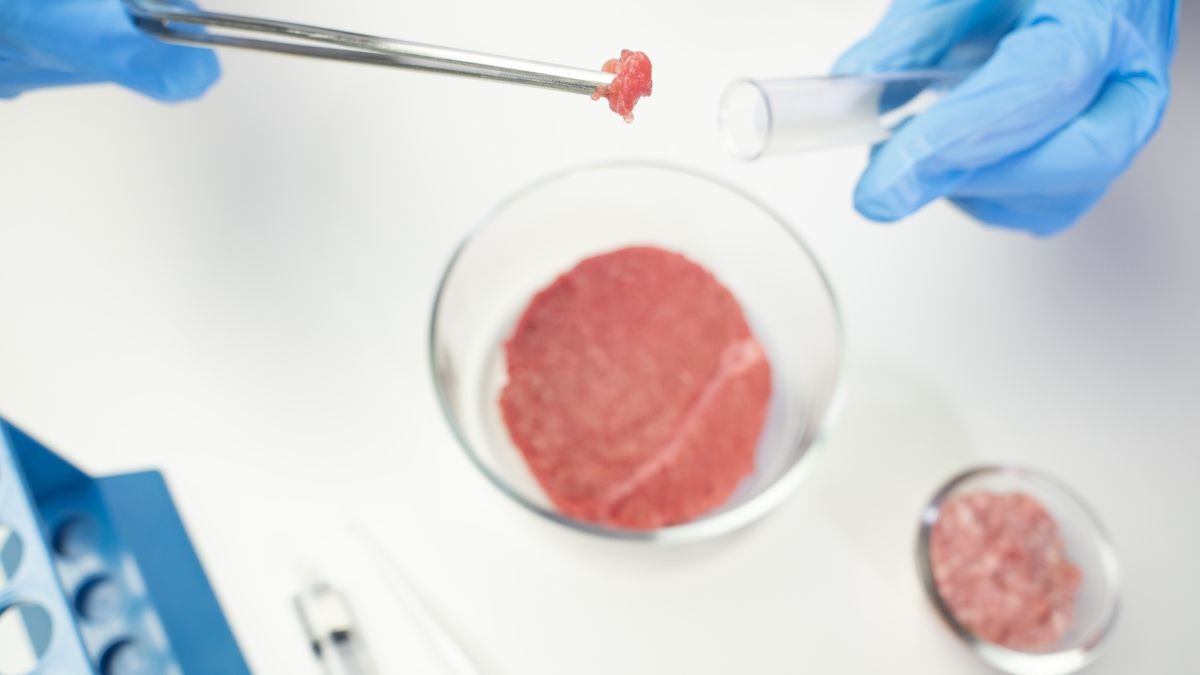
What is cultured meat exactly?
Cultured meat is grown in laboratories from animal cells. As a rule, the cells originate from living animals and are extracted through a biopsy, less commonly they are extracted from dead animals. These cells are cultivated in a nutritious solution, often in a bioreactor, where they grow into muscle tissue. The aim is to create a product that barely differentiates from conventional meat in terms of its taste, texture and nutritional value.
The technology is constantly further developed and in the meantime it is possible to create different meat types of chicken, beef, pork or fish using this method. Pioneers in the industry like GOOD Meat and Mosa Meat are working on reducing the production costs and making the product suitable for the masses. Whereas the first cultivated burger in the year 2013 cost more than Euro 250.00, similar products can be manufactured for a fraction of this price today.
The advantages that cultured meat promises are impressive: It is to drastically reduce the greenhouse gas emissions, use less land and water and at the same time minimise the risk of food safety problems like zoonosis and antibiotic resistance. However, in spite of this progress the question remains as to whether this technology is compatible with the principles of veganism.
Why is cultured meat disputed?
From a vegan point of view cultured meat is an ethical dilemma. On the one hand, it could protect billions of animals from being slaughtered. On the other hand, the fact remains that it cannot be produced without the extraction of animal cells - at least not according to the current state of technology. So-called fetal bovine serum (FBS) is often used for the cultivation, which is drawn from the blood of unborn calves. Even if many companies are working on developing plant-based alternatives, this is a clear contradiction to the vegan philosophy, which rejects any form of animal exploitation.
A further critical point is the fact that cultured meat could promote the normalisation of meat consumption. Instead of increasing the demand for animal-free food and questioning the consumption of meat overall, it could arouse the impression that meat consumption - albeit technically modified - is still acceptable. This could even further increase the social acceptance of meat and curb the progress of the vegan movement.
Environmentally-friendly, but not perfect
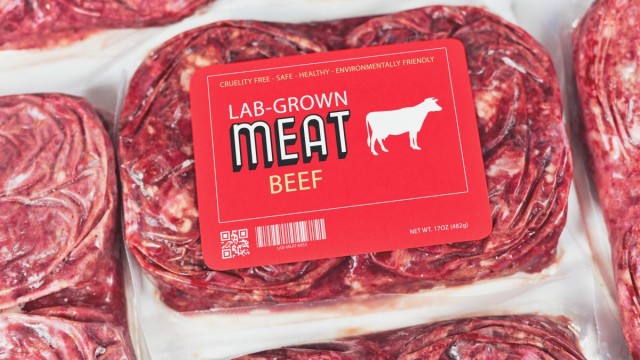
A main argument for cultured meat is its potentially lower impact on the environment in comparison to conventional livestock husbandry. Livestock farming is one of the main sources of greenhouse gas emissions and requires large amounts of land and water. The production of cultured meat requires up to 90% less land and 60% less water according to studies. Furthermore, forests that are cleared to make space for pastures, could be renaturalised, which the biodiversity and climate would benefit from.
But there are also limitations. The technology is not yet fully developed and many studies are based on models that estimate the potential environmental effects in the future. Furthermore, the production of cultured meat requires energy, the source of which also impacts the climate footprint. Without switching over to renewable energy sources this technology could be less sustainable than its advocates maintain.
Health aspects and challenges
Critical voices
Alongside ecological considerations, the health factor of cultured meat is also often discussed. Critics are expressing concerns about the long-term effects of the new foodstuff on human health.
The scepticism about "artificial" or "unnatural" foodstuffs remains to be an obstacle that has to be overcome in order to ensure its acceptance among the broad population.
Positive voices
However, advocates argue that cultured meat could be safer than conventional meat because the controlled production conditions in laboratories minimises the risk of bacteria like salmonella or E. coli.
Also, doing without factory farming would reduce the risk of pandemics and antibiotic-resistant germs. These advantages could make an important contribution to public health.
From a vegan point of view: Progress or a step back?
The opinions about cultured meat within the vegan movement are divided. Some people see the technology as an opportunity to cover the meat consumption without animals suffering and thus creating a compromise between meat lovers and animal rights activists. Others warn that cultured meat doesn't solve the deeper problems of speciesism - the systematic discrimination of animals. Animals are still considered to be a resource and the underlying beliefs that legitimate animal exploitation remain untouched.
A focal point of the criticism is that there are already a host of plant-based alternatives that are made without animals having to suffer which could also replace the consumption of meat. These alternatives require no animal cells or laboratory technology and are often cheaper and more sustainable to produce. So, why rely on an expensive and complex technology when more simple solutions already exist?
Conclusion: A question of ethics and priorities
Cultured meat is without doubt an exciting innovation with the potential of radically changing the way we produce food. It could help reduce environmental pollution and the suffering of billions of animals. However, from a vegan point of view the question remains as to whether it is compatible with the principles of an animal-free way of living.
The decision to support or reject cultured meat depends on the individual priorities. Those who primarily focus on reducing animal suffering may consider the technology to be an important step forward. But those who are striving to achieve the complete abolition of animal exploitation possibly see cultured meat more as a step back.
What remains is the cognition that the future of our food doesn't lie in technological innovations alone. True change requires a social transformation which fundamentally questions the way we think about animals, food and consumption.
Source: Research briefing no. 2: November 2024 - Cultured Meat, by Alexander Huntley and Dr. Lorna Fenwick McLaren from the Vegan Society:

