-

- Magazine
-
Articles
Sung-Hee Kim, on the hype about Korean cuisine
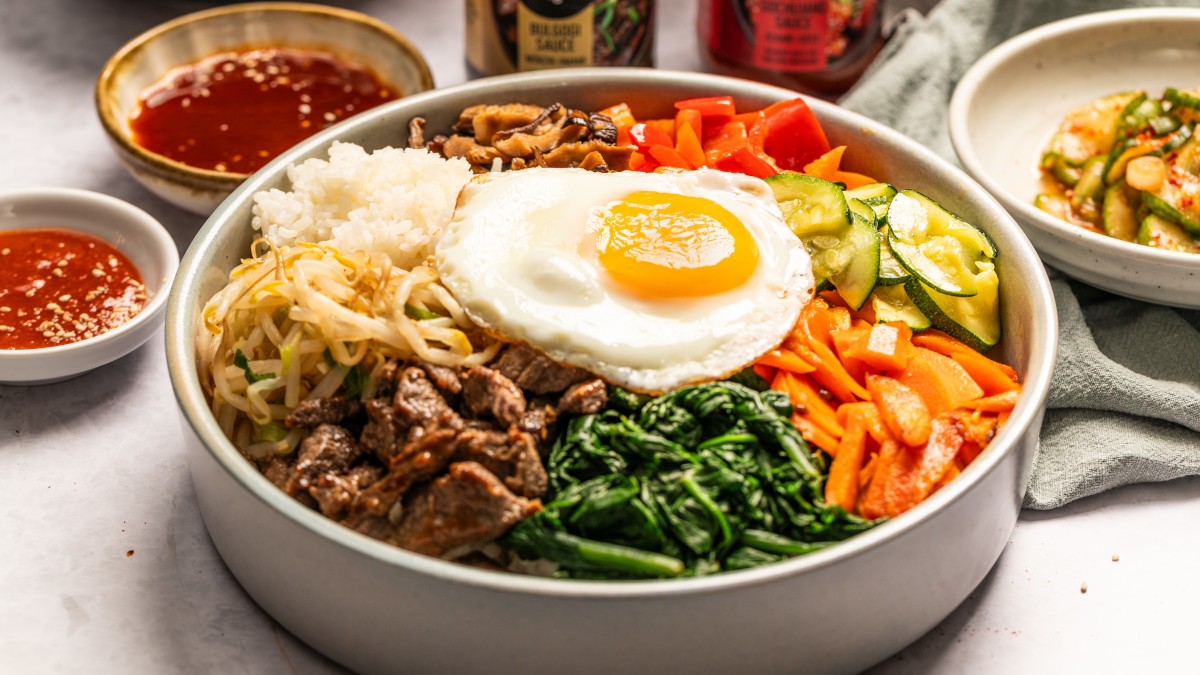
Korean cuisine – from hype to market shift
Under the motto "Flavour meets trends", as Anuga's partner country, Korea showed a strong presence in 2025. How can the Korean cuisine now be successfully introduced in Germany? Sung-Hee Kim, founder of the food start-up Arang, spoke to us in an interview about what makes the Korean cuisine unique, how it can be established in Germany and which opportunities she sees for the future of K-food.
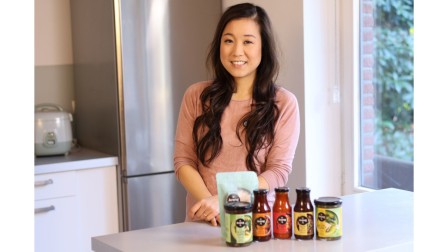
Portrait of Sung-Hee Kim, owner of Arang (Image: © Arang)
About Sung-Hee Kim
Since 2021, Sung-Hee Kim, founder of Arang, has been bringing authentic Korean flavours to the German market with her food start-up.
Arang: That was the name of the first Korean restaurant in North Germany, which her parents opened in Hamburg in 1975.
50 years later, Sung-Hee Kim is carrying on the tradition. Today, Arang offers a steadily growing range of Korean culinary essentials, from traditional soups and spices, through to sauces and rice.
What makes K-food so exciting on the European market?
For me, K-food is particularly exciting because it embodies what many people are looking for today: Taste, health and uncomplicated, everyday cooking. Korean cuisine is so diverse and yet so natural – with plenty of vegetables, fermentation and strong flavours. The fact that it can also be more or less veganised, fits in perfectly with the current food trends. I often find that people are surprised how simple cooking Korean food actually is. This combination between authentic recipes and a modern, conscious eating culture makes K-food particularly appealing for Europe.
How is the K-wave influencing the popularity of K-food?
The K-wave, also referred to as Hallyu wave, has made the Korean culture visible worldwide – and food plays a central role in this. In K-dramas joint meals are an important part of the narrative and K-pop stars also share their favourite dishes. This creates emotional curiosity, which quickly leads to people trying out Korean cooking themselves. I find it especially exciting that this development is not a coincidence: South Korea has been promoting culture exports in a very targeted manner for years. As a German Korean, I find it moving how art, media and culinary arts are becoming a bridge between cultures.
What distinguishes K-food from Chinese or Japanese cuisine?
In terms of taste, the Korean cuisine is much more savoury and adventurous. Ingredients like doenjang or gochujang lend many of the dishes a depth and warmth that is instantly recognisable. At the same time, the perception of other Asiatic cuisines is also changing: 20 years ago, for many people Chinese food was primarily associated with sweet and sour chicken and Japanese food exclusively with sushi. Today, we are experiencing a much stronger differentiation – handmade biang-biang noodles characterise modern, Chinese restaurants and apart from sushi Japan is also well-known for its high-quality ramen dishes.
Amidst this development, scope has naturally also arisen for Korean dishes in the everyday routine. People are more open to new flavours and K-food has its own characteristic flavour world that is totally different to other Asiatic cuisine.
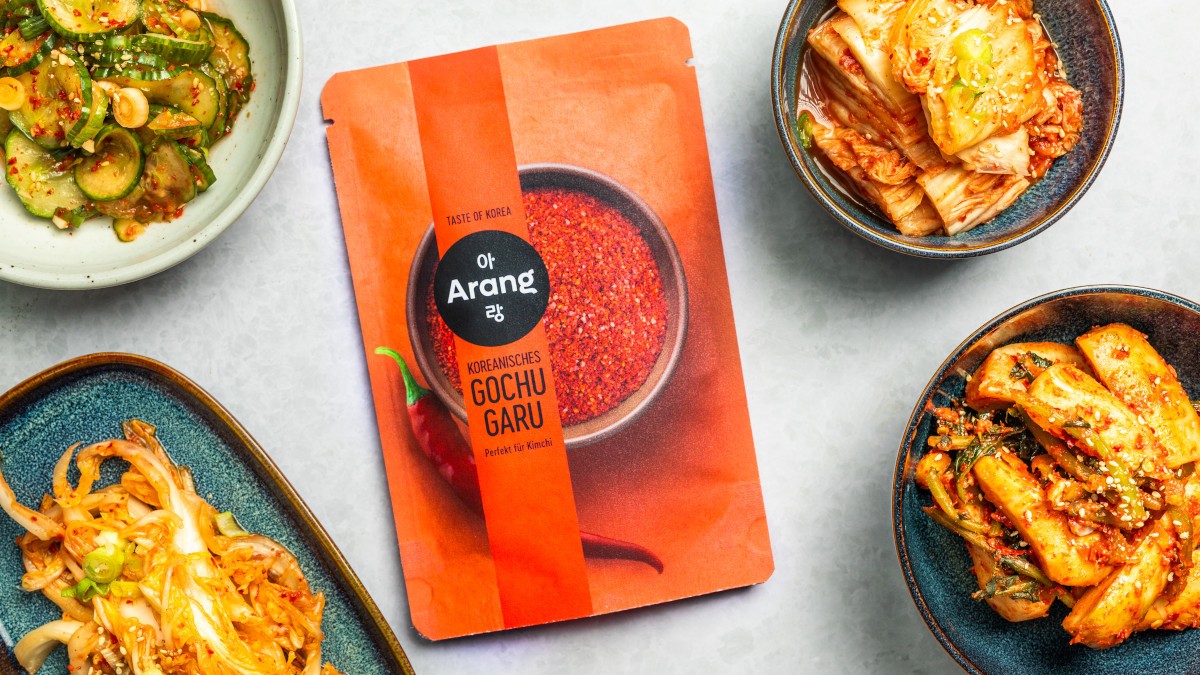
An essential component of Korean cuisine: gochugaru. (Image: © Arang)
Which strategies work in positioning K-food authentically and as being suitable for everyday use?
Anything that breaks down inhibitions is ideal. Social media is excellent here – through short insights into the kitchen, simple recipes and practical instructions. However, it is decisive that it doesn't solely comprise of nice pictures. People have to experience that they can actually make Korean dishes themselves and that the taste impresses. This is precisely the moment - when someone realises "I can do this at home too!" - that the cuisine becomes approachable and builds trust. This creates a natural connection to K-food in everyday life.
How important is storytelling in K-food marketing?
Storytelling plays a huge role, because K-food is still new territory for many people. When I explain why certain recipes are of importance to me or how I grew up with Arang, the products automatically gain cultural depth. Particularly younger consumers respond strongly to authenticity. They want to know what is behind a brand and which values characterise it. Stories create proximity – and make it not only possible to experience Korean cuisine in terms of taste, but also emotionally.
What role do sustainable and plant-based products play?
I see great potential here, even though the market is still in its infancy. In the trade, many people primarily encounter K-food as instant products – which is a good start, but not representative of the cuisine's diversity. In the food service trade, trendy dishes like Korean fried chicken or Korean barbecue dominate the scene.
This is why my first product was consciously Korean seaweed soup: A traditional dish that unites two developments – the shift towards healthier eating and the growing importance of seaweed as a sustainable food source. This product may still seem unusual to some people, but that is exactly where the opportunity lies.
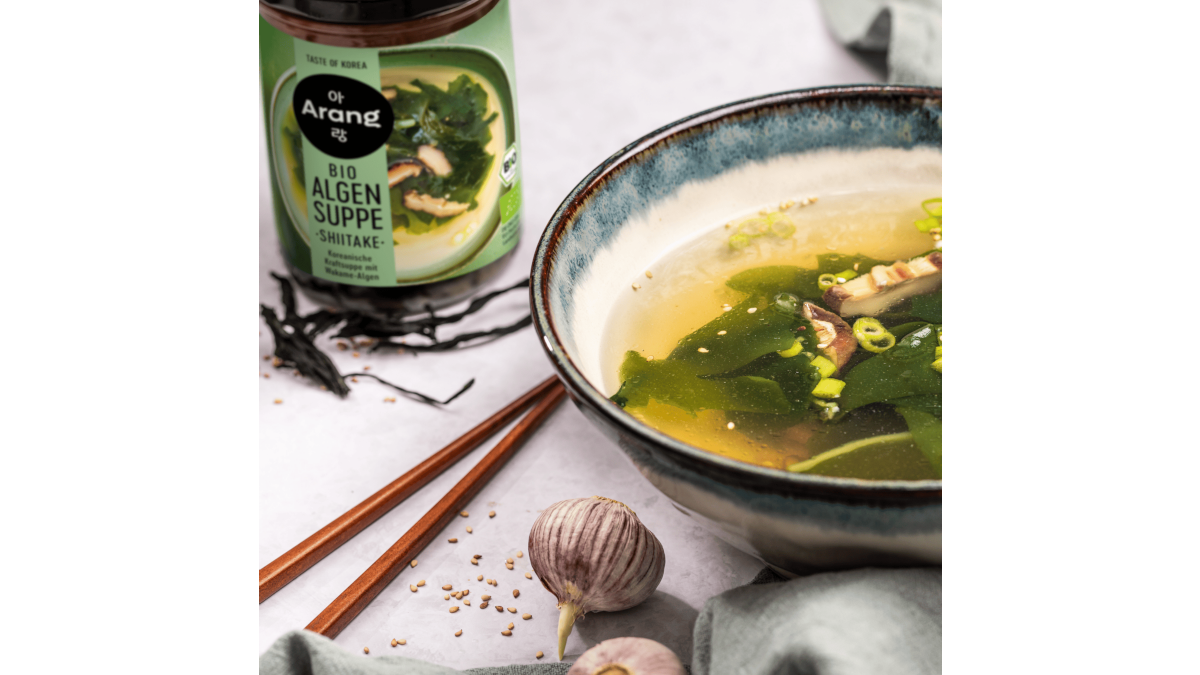
A traditional Korean dish, redefined: Arang's seaweed soup with shiitake mushrooms. (Image: © Arang)
How does Arang unite traditional recipes with the daily European routine?
It was my aim from the very start to allow Korean cuisine to be experiencedin the way I know it from my family – without complicated steps, but full of authenticity. At the same time, I want to inspire people to escape from their everyday routines for a while and explore new culinary paths. Many people ask themselves daily: "What shall I cook today?" – that is exactly where our products and recipes come in.
The seaweed soups only have to be warmed up but they still taste like a traditional recipe from Korea. Our sauces can be used in versatile ways: for marinating, dipping and seasoning. Customers often tell me that Arang has helped them overcome their inhibition to try Korean food. That is precisely what motivates me.
Which marketing strategies does Arang use to combine authenticity and innovation?
Social media is more than a marketing channel for Arang – it is a place where I can tell my story and where I can show all that Korean cuisine stands for. People don't just want to see products, but the actual personality behind them. At the same time, we develop products that reinterpret traditional flavours for modern everyday life. My appearance in "Die Höhle der Löwen" (German equivalent of Dragon's Den) strongly reinforced this combination between a personal founder story and innovative convenience products.
And the in-person experience remains to be equally important: People try out Korean dishes directly at food events or during my cookery courses, pose questions and feel the enthusiasm. These encounters create a connection that wouldn't be possible on a digital level alone.
Conclusion: Korean cuisine as trend food of the future
The founder, Sung-Hee Kim, demonstrates impressively with her company, Arang, how the Korean cuisine meets the current zeitgeist. With innovative products she addresses people who would like to follow a healthy and modern diet and offers them at the same time the opportunity to become immersed in the Korean culture: with fermented food, plant-based dishes and practical recipes for everyday meals at home.
Recommended links:
- https://www.anuga.com/magazine/articles/korean-innovations-between-streetfood-and-high-tech.php
Author
Madlen Pekrul