
-

- Magazine
-
Articles
Food upcycling and cell-based food
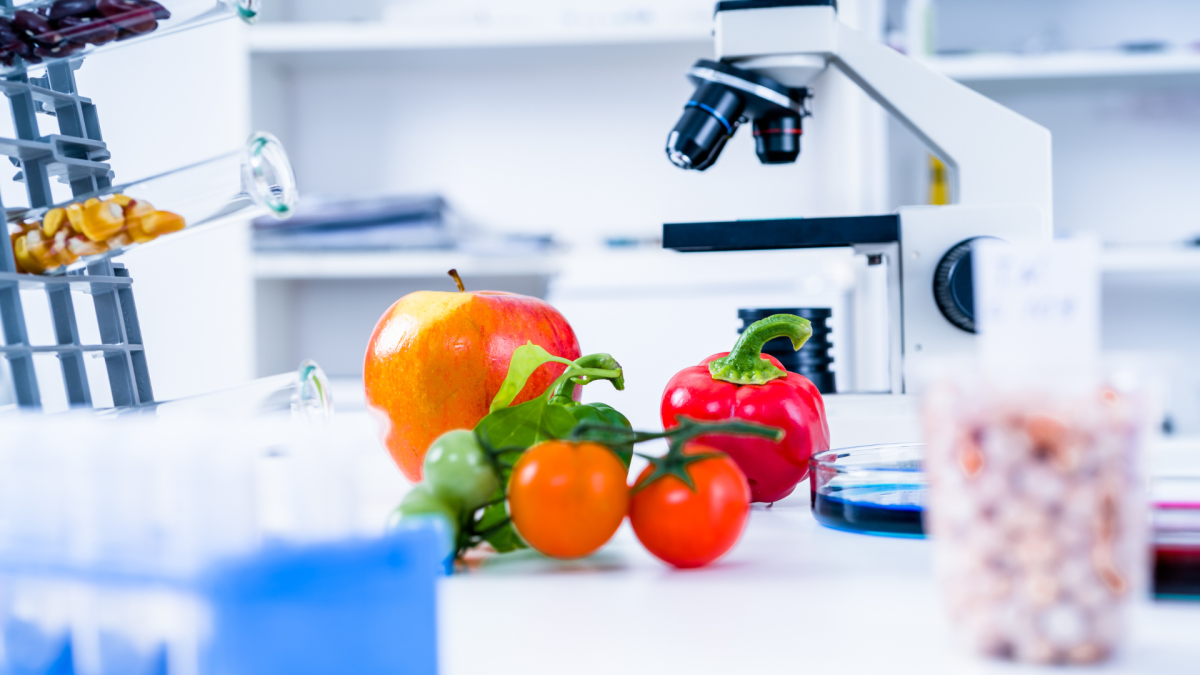
Food upcycling: Creative use of left-over materials
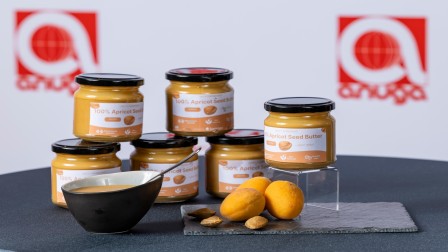
Example of food upcycling: Kern Tec's apricot kernel butter. (Image: @Koelnmesse)
Food upcycling is rapidly evolving from a niche topic into an innovation driver for the industry. The underlying principle: Left-over food from by-products is not waste. They are underestimated resources that can be transformed into creative food ideas.
Examples of food upcycling:
- Brewer's yeast, a by-product of beer production, is processed into protein bars.
- Fruit and vegetable peel, which would otherwise be thrown away, end up in smoothies, are processed into snacks or are used as additives in new products.
- Coffee grounds are used in sustainable chocolate or beauty products.
Kern Tech from Austria presented a prime example of how a high-quality food product can be created through upcycling at ANUGA 2025: The company's apricot kernel butter made it under the top ten of the Anuga taste Innovation Show 2025 .
Alternative proteins: Innovation in the lab
A different approach to food upcycling, but one that pursues a similar goal, is the development of cell-based food. This involves developing meat, fish or animal-based products using cell cultures. The advantages are clear:
- Environmentally-friendly: The goals are significantly lower land and water consumption as well as reduced greenhouse gas emissions compared to conventional animal production.
- Animal-friendly: No animals are slaughtered and there are no traditional animal welfare issues associated with animal husbandry.
- Controlled quality: In cell production the nutrient content, safety and residues can be regulated more efficiently.
Bluu Seafood presented an insight into the future of alternative proteins on the Anuga HORIZON Stage: The start-up develops cell-cultivated fish and cell-based caviar as a hybrid of fish cells and plant-based raw materials.
Two approaches, one goal: Sustainable food
Although food upcycling and cell-based food hardly seem comparable at first glance – the one creative and down-to-earth, the other futuristic and technological – both pursue the same goal: more sustainable food.
Food upcycling relies on low-tech, creative processing and fast scaling. By utilising by-products, waste is reduced and the added value increased. Consumer acceptance is high because the products are based on familiar raw materials.
The production of cell-based food requires high-tech processes and is still cost-intensive, but holds enormous potential: The production of cell-based food allows significant reductions in land consumption, CO₂ emissions and animal husbandry.
In their differences, the two approaches complement each other perfectly: Food upcycling provides immediate effects, cell-based food ensures tomorrow's sustainability.
Innovation potential for the food industry
The integration of food upcycling offers companies the opportunity to transform unused by-products into valuable raw materials in a targeted way. The reuse of food creates scope for new, sustainable products. At the same time, the upcycling approach has a positive impact on brand perception because the consumers increasingly expect resource-friendly concepts.
In turn, a new field of innovation arises through the development of cell-based food: Companies can invest early in a growing segment, enter partnerships with biotech start-ups or launch own research projects. Brands that take bold steps today can secure themselves a long-term competitive edge in a rapidly developing market.
Food upcycling meets high-tech: Rethinking food
Both intelligent resource usage as well as pioneering technologies and companies that are prepared to tread new ground are decisive for the future of food. Food upcycling already provides innovative food solutions today that are more sustainable, economically attractive and well-accepted by the market. Cell-based food on the other hand opens the door to a totally new mode of production that is not reliant on animal husbandry, the weather or ecological limitations. Both approaches make the food industry more resilient, more innovative and significantly more sustainable. Companies that invest, experiment and cooperate now, will shape the food systems of the next generation with their products.